
"coffee defects identification"
100 article(s) found

Identification of coffee beans graded defective beans in coffee producing areas of Kenya
◎ grades defective beans by the number of points, which is the earliest method of grading, and is still in use in many parts of Brazil. The method of identification is to randomly take 300 grams of samples and put them on black paper, because black paper can best avoid reflection. Then, examined carefully by the professional appraiser, find out the defective beans in the sample, and accumulate different scores according to the types of defects. For example, one black bean counts as one.

Identification of coffee beans good and bad coffee bean grading system defective bean species identification method
Whether the gloss is good, the color is uniform and without spots; smell its fragrance-whether it is fragrant and rich; oral test brittleness-put it into the mouth, whether it is crisp and sound, taste good, and finally see if the bean shape is full and weighty. Because you can't make mellow coffee without good coffee beans / powder.

Introduction about SCAA coffee cup tasting expert Q GRADER
Now South Koreans have accounted for 1x4 of the more than 1000 Q GRADER in the world. I hope more friends can pass smoothly. First, about the examination item Q GRADER belongs to an examination, the explanation part is relatively few. At present, the examination time is 5 days, with a total of 22 items. Including 1 written coffee test, 3 taste threshold tests, 4 smell bottle smell tests and 5 triangle cup tests

Coffee technology coffee roasting Roasting Skills training
SCAE has officially rescheduled the baking course, changing the previous Level1 and Level 2 to three levels: [Foundation Junior] [Intermediate Intermediate] [Professional Advanced]. [Foundation Primary] objective: to understand the basic knowledge of raw coffee beans; to understand the basic knowledge of roasting utensils and roasting processes; and to perform roasting according to a predefined roasting plan.

How to get the Q-Grader of "coffee quality appraiser"? Is it difficult to get a Q?
Professional coffee knowledge exchange more coffee bean information please follow the coffee workshop (Wechat official account cafe_style) We like coffee, are attracted by the aroma of coffee, can not wait to drink the entrance, but there are some small steps to make the tip of your tongue amazing to the deep taste of coffee. These are the cup testers must have a basic understanding: smell: coffee aroma from different producing areas, flower, fruit, grass.

Some summaries about Q-GRADER examination
First, about the examination subject Q-GRADER is a test jointly certified by SCAA and CQI. At present, the examination will take 5 days, with a total of 22 subjects. If you pass all the subjects, you can get Q-GRADER certification. If you have failed subjects, you can pass the make-up exam within 18 months. Specific subjects include: ①, 1 general knowledge written test, 100 answers in 1 hour
Some summaries about the Q-GRADER exam the barista exam
First, about the examination subject Q-GRADER is a test jointly certified by SCAA and CQI. At present, the examination will take 5 days, with a total of 22 subjects. If you pass all the subjects, you can get Q-GRADER certification. If you have failed subjects, you can pass the make-up exam within 18 months. Specific subjects include: ①, 1 general knowledge written test, 100 answers in 1 hour

Some summaries of Qgrader examination for reference
After successfully passing the Q GRADER exam, some friends who are interested in the Q GRADER exam have asked me about the exam. It is true that there is less data in this area. Therefore, I would like to make a general summary here to give some reference to friends who want to take the Q GRADER. First, about the examination subject Q GRADER is an examination jointly certified by SCAA and CQI. At present, the examination will be arranged for 5 days.

Barista examination some summaries of the barista Qgrader examination
After successfully passing the Q GRADER exam, some friends who are interested in the Q GRADER exam have asked me about the exam. It is true that there is less data in this area. Therefore, I would like to make a general summary here to give some reference to friends who want to take the Q GRADER. First, about the examination subject Q GRADER is an examination jointly certified by SCAA and CQI. At present, the examination will be arranged for 5 days.

Some summaries of the Qgrader exam Coffee Cup Test
After successfully passing the Q GRADER exam, some friends who are interested in the Q GRADER exam have asked me about the exam. It is true that there is less data in this area. Therefore, I would like to make a general summary here to give some reference to friends who want to take the Q GRADER. First, about the examination subject Q GRADER is an examination jointly certified by SCAA and CQI. At present, the examination will be arranged for 5 days.

Coffee Q-GRADER test materials some summary of the Q-GRADER exam
First, about the examination subject Q-GRADER is a test jointly certified by SCAA and CQI. At present, the examination will take 5 days, with a total of 22 subjects. If you pass all the subjects, you can get Q-GRADER certification. If you have failed subjects, you can pass the make-up exam within 18 months. Specific subjects include: ①, 1 general knowledge written test, 100 answers in 1 hour

Classification of coffee beans to distinguish defective beans
Grading by the number of points of defective beans is the earliest classification method, and it is still in use in many parts of Brazil. The method of identification is to randomly take 300 grams of samples and put them on black paper, because black paper can best avoid reflection. Then, examined carefully by the professional appraiser, find out the defective beans in the sample, and accumulate different scores according to the types of defects. For example, one black bean counts as one point.
Some summaries about Q GRADER examination
After successfully passing the QGRADER exam, some friends who are interested in the QGRADER exam have asked me about the exam. It is true that there is less data in this area. Therefore, I would like to make a general summary here to give some reference to those who want to take the QGRADER. First, about the examination subject QGRADER is an examination jointly certified by SCAA and CQI. At present, the examination will be arranged for 5 days.

Introduction to the classification of boutique Kenyan coffee
◎ grades defective beans by the number of points, which is the earliest method of grading, and is still in use in many parts of Brazil. The method of identification is to randomly take 300 grams of samples and put them on black paper, because black paper can best avoid reflection. Then, examined carefully by the professional appraiser, find out the defective beans in the sample, and accumulate different scores according to the types of defects. For example, one black bean counts as one.

Coffee grades introduction Coffee Grade introduction Fine Coffee beans
◎ grades defective beans by the number of points, which is the earliest method of grading, and is still in use in many parts of Brazil. The method of identification is to randomly take 300 grams of samples and put them on black paper, because black paper can best avoid reflection. Then, examined carefully by the professional appraiser, find out the defective beans in the sample, and accumulate different scores according to the types of defects. For example, one black bean counts as one.

Classification standard and food safety standard of coffee beans what documents do you need to apply for to open a coffee shop?
Coffee bean grading standards and food safety standards what documents are required to open a coffee shop this is the earliest grading method, and it is still in use in many parts of Brazil. The method of identification is to randomly take 300 grams of samples and put them on black paper, because black paper can best avoid reflection; then a professional appraiser will examine it carefully to find out the defective beans in the sample and press the defective ones.

Kenyan coffee beans graded by the number of defective beans Introduction to fine coffee
This is the earliest grading method and is still in use in many parts of Brazil. The method of identification is to take a random sample of 300 grams and put it on black paper, because black paper can best avoid reflection. Then, professional appraisers carefully inspect the samples to find defective beans and accumulate different scores according to the types of defects. For example, one black bean counts as one.

Coffee beans size graded siphon coffee pot & what kind of coffee does #160; make?
◎ grades defective beans by the number of points, which is the earliest method of grading, and is still in use in many parts of Brazil. The method of identification is to randomly take 300 grams of samples and put them on black paper, because black paper can best avoid reflection. Then, examined carefully by the professional appraiser, find out the defective beans in the sample, and accumulate different scores according to the types of defects. For example, one black bean counts as one.
Identification of coffee beans: differences in size, specification, altitude, quality and taste of coffee beans
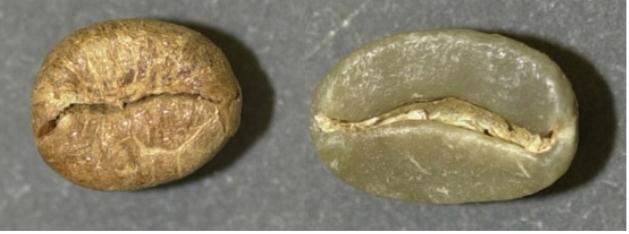
A, coffee can be divided into washing type and non-washing type according to specifications, and can also be divided into flat beans and round beans. Washing type: in the sink, after rubbing with water and utensils, the pulp and colloid are removed and dried, which is called washing coffee bean with uniform quality. Non-washing type: after the sun is naturally dried, the pulp and peel is removed by a sheller, and its quality is unstable. The fruit of coffee is made up of two oval shapes

Introduction to Grinding Manor by Variety treatment method in Coffee production area in Kenya
Coffee producing areas in Kenya say this is the earliest grading method, which is still in use in many parts of Brazil. The method of identification is to randomly take 300 grams of samples and put them on black paper, because black paper can best avoid reflection. Then, examined carefully by the professional appraiser, find out the defective beans in the sample, and accumulate different scores according to the types of defects. For example, one black bean counts as one point.